
Data security in connected vehicle systems

The rapid advancement of technology in the automotive industry has brought about innovative connected vehicles. These vehicles interact with the internet, mobile apps, and other infrastructure. As a result, data security has become a critical aspect for cybersecurity experts [1].
Every connected vehicle acts as a moving data center. It collects information regarding location, driver behavior, and the mechanical health of the engine. Protecting this sensitive information requires robust protection strategies [2].
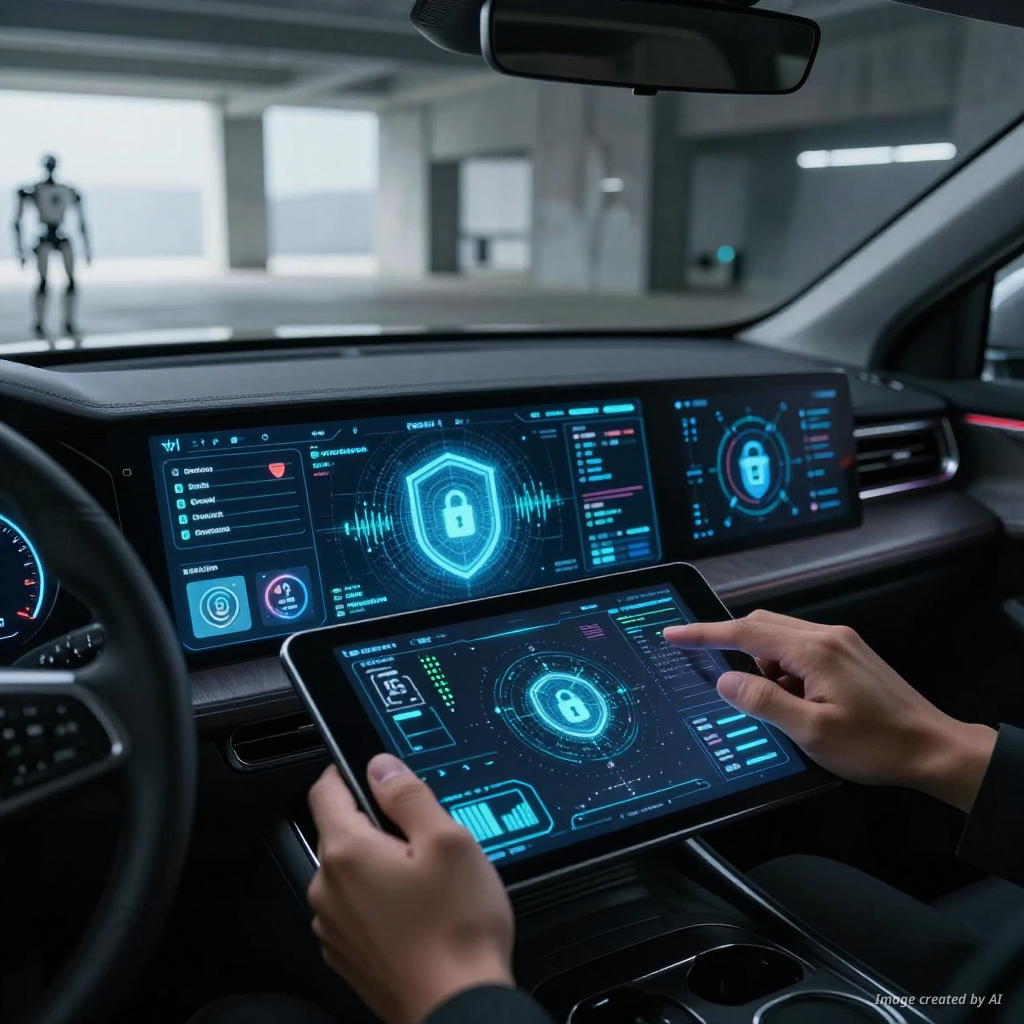
The importance of data privacy in automotive
Connected vehicles are frequent targets for cyber attacks. Hackers may attempt to breach the system to steal personal information. As experts, we must understand these risks at every stage of vehicle development [3].
Beyond data theft, system attacks can compromise passenger safety. Controlling critical vehicle functions poses a significant threat. Therefore, ADAS and autonomous driving technology in the VF9 requires a high level of security.
Vehicle cybersecurity threats
There are many ways malicious actors can compromise a vehicle. Wireless interfaces such as Bluetooth, Wi-Fi, and cellular networks are primary entry points. Securing these connections is essential for the integrity of the entire system [4].
The following are common threats to watch out for:
- Man-in-the-middle attacks on vehicle communication.
- Malicious software introduced through updates.
- Exploitation of third-party application vulnerabilities.
- Unauthorized access to vehicle diagnostic ports.
Implementing robust defense
Building a strong security architecture is not an option but a necessity. Manufacturers must use encryption for all transmitted data. Encryption ensures that information remains private even if intercepted [5].
Regular code audits and penetration testing should be part of the process. Through these, vulnerabilities can be identified before they are exploited. Being proactive is more effective than merely responding after an incident.
The role of security experts
As professionals in the field, we have a responsibility to set standards. Collaboration between software engineers and automotive engineers is crucial. We must ensure that security is not sacrificed for the sake of product release speed.
Education regarding new threats must be continuous. The cybersecurity landscape is changing rapidly. Learning about new technologies such as blockchain or AI-driven threat detection will help us. For more information, you can visit Hello world! for industry updates.
Compliance with regulations and standards
Compliance with global standards such as ISO/SAE 21434 is essential. These regulations provide a framework for managing cybersecurity risk. Adhering to them demonstrates a dedication to user safety.
Local data privacy laws must also be considered. Protecting citizens’ information is a legal obligation. Transparency in how data is used builds trust with consumers.
The future of connected vehicles
The future is focused on higher levels of automation. As vehicles become smarter, security challenges become increasingly complex. Preparing today will determine the success of tomorrow’s technology.
Focusing on “security by design” should be the foundation of every project. In this way, we can ensure safe travel for everyone. Connected vehicles have the potential to transform transportation, provided we can maintain their security.
More Information
- Cybersecurity: The practice of protecting computer systems, networks, and data from digital attacks, damage, or unauthorized access through various technical measures.
- Connected vehicle: A vehicle that uses technology to communicate with external systems, such as the internet, other vehicles, or road infrastructure for safer driving.
- Encryption: A process of converting information into a code to prevent unauthorized access, ensuring that data can only be read by those with the correct decryption key.
- Penetration testing: A simulated cyber attack performed on a system or network to identify vulnerabilities that could be exploited by hackers in a real-world scenario.
- ISO/SAE 21434: An international standard that provides requirements for cybersecurity risk management throughout the engineering lifecycle of vehicles and their components.
Related Posts
-
Uncategorized
A guide to personalizing your car’s windshield head-up display
Read more →Head-up display (HUD) technology is rapidly becoming standard in modern vehicles today. By projecting essential information directly onto the windshield,…
-
 Uncategorized
The role of AI-based collision warning systems in modern transportation
Read more →Advancements in automotive technology are bringing significant changes to road safety. One of the most important innovations today is the…
-
 Uncategorized
The importance of smart EV charging management software in the Philippines
Read more →The rise of electric vehicles (EVs) in the Philippines is rapidly transforming our transportation landscape. Under Republic Act No. 11697,…